
Henry VIII – Royal Patron of Anglo-Hellenism
The New Anglo-Hellenic Review
by Jonathan Williams
In the year 1545 the royal mint struck an extraordinary presentation medal in gold and silver to celebrate Henry VIII’s unique position as king and supreme head of the church in England and Ireland.
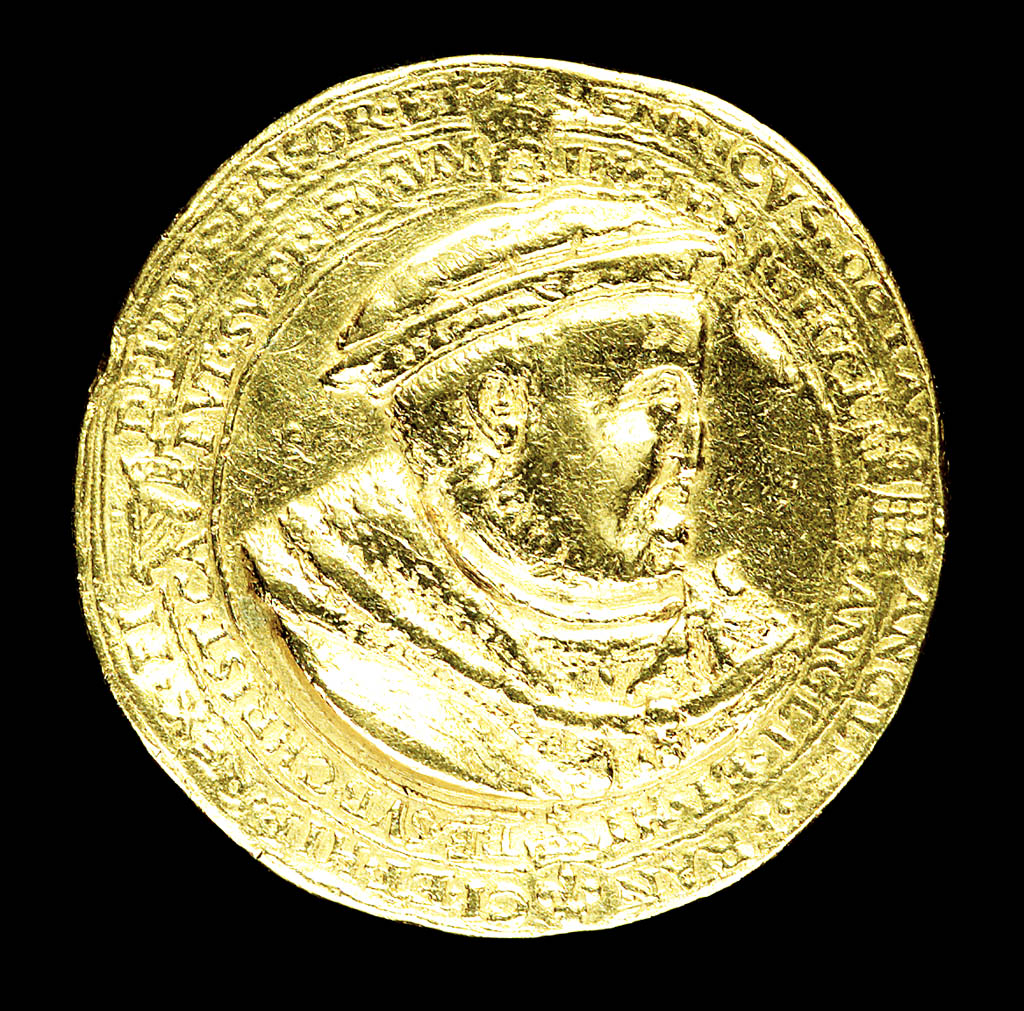
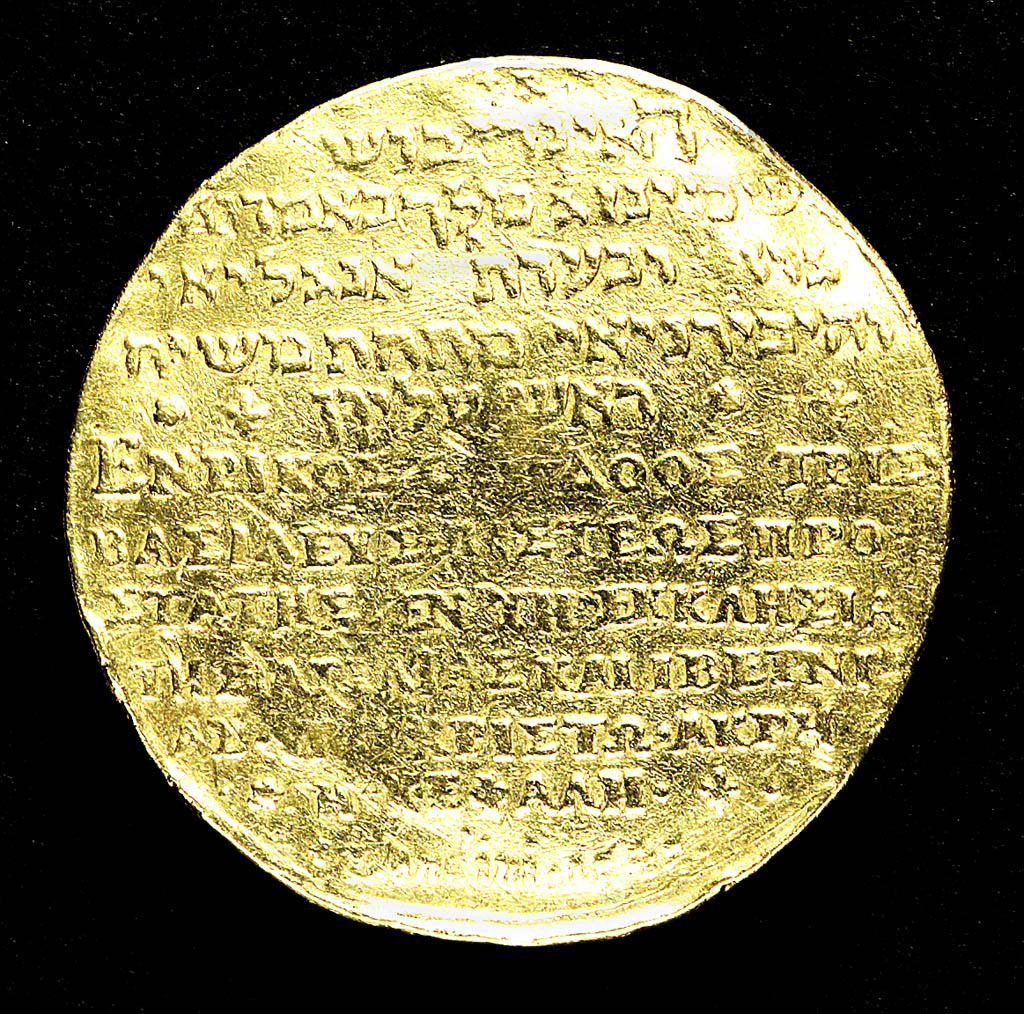
Medal commemorating the King’s supremacy over the Church, 1545 | Royal Museums Greenwich
© National Maritime Museum, Greenwich, London.
Commemorative medallions for presentation to favoured courtiers and hangers-on were a recent arrival in England, and this medal is full of art historical interest. But what makes this meaningful for Anglo-Hellenics is its legends which, for the first time ever on English coins and medals, give the royal titles in three languages - Latin, Hebrew, and Ancient Greek. Now, Latin was widely used across western Europe by the educated and the clergy. But Greek was a comparative newcomer on the English scene. By the 1540s, it had been taught at Oxford and Cambridge Universities for some decades by scholars inspired by Italian humanists and the great Dutch theologian Desiderius Erasmus who spent several years in England. But learning Greek remained a minority pursuit for the educated. Yet its impact on them was huge as it made Classical texts, early Christian writers and, above all, the New Testament available in the original for the first time. This proved revolutionary, both culturally and ecclesiastically. The earliest enthusiasts of Greek in Western Europe were not Protestants, but the Reformation quickly took up the study of both scriptural languages as a means of by-passing the mediating power of the Catholic Church and going straight to the source as revealed in the Bible.
Henry VIII didn’t know much Greek, as far as we can tell. But he did patronise the new learning, founding Regius (royal) professorships in Hebrew and Greek at Oxford and Cambridge Universities around 1540. Edward, his heir and successor, who became king at the tender age of nine, was thoroughly tutored in Greek. At 12, he was already reading Aristotle’s Ethics. Not exactly children’s literature. But accessing the sources of wisdom – both religious and philosophical – in Greek was regarded as a key part of his formation as a Christian ruler. There were Greek readers among female members of the English elite too. Saintly Thomas More instructed his beloved daughter Margaret in Greek, and Jane Grey, the ill-fated Nine Days Queen, was poring over Plato at the age of 13. Princess, later Queen, Elizabeth was another teenage Greek scholar. The year 1543 saw the earliest Greek text to be printed in England, two sermons of St John Chrysostom edited by Sir John Cheke, the first Regius Greek Professor at Cambridge. Not perhaps the most famous work of ancient literature, but it shows how important religion was as a spur to Hellenic studies in the sixteenth century. Its printer, Dutch-born Reginald Wolfe, was the first in England to possess a complete Greek character set. Four years later he became Latin, Greek and Hebrew printer to King Edward VI. The 1540s were a key decade for the progress of Hellenic studies in England.
Let us take a closer look at the spectacular medal made for Henry VIII.
On the front, or the obverse, it shows Henry in profile wearing the iconic outfit familiar from many sixteenth-century paintings. Around the image appears the royal title in Latin: “Henry VIII, King of England, France and Ireland, Defender of the Faith, and on earth Supreme Head under Christ of the English and Irish Church”. On the other side, these words are translated into Hebrew and Greek. We’ll just focus on the latter here:
ΕΝΡΙΚΟΣ Ο ΟΓΔΟΟΣ ΤΡΙΣ
ΒΑΣΙΛΕΥΣ • ΠΙΣΤΕΩΣ ΠΡΟ ̶
ΣΤΑΤΗΣ • ΕΝ ΤΗ ΕΚΚΛΗΣΙΑ ΤΗΣ ΑΓΓΛΙΑΣ ΚΑΙ ΙΒΕΡΝΙ ̶
ΑΣ • ΥΠΟ ΧΡΙΣΤΩ • ΑΚΡΗ
Η ΚΕΦΑΛΗ •
Translated into English, it says: “Henry the eighth three times king, of faith guardian, in the church of England and Ireland, under Christ, the high head”. Considering that it’s one of the very first Greek texts ever to be composed and published in England, it’s not bad. The author was probably an English scholar, perhaps Cheke himself. The only part of the royal title the translator seriously misjudged was perhaps the most important: “high head”. This is a weak translation of “supreme”, and it underplays Henry’s absolute authority over the church established by law in 1534. Its deficiencies were, perhaps unconsciously, registered by a remarkable man, Nikandros Noukios, a Greek from Corfu who came to England in 1545 on an embassy from the emperor Charles V and later wrote an account of his experiences (See Greek Eyes on Europe: The Travels of Nikandros Noukios of Corfu, edited by John Muir, 2022). Noukios saw one of the medals and his eye was caught by the Greek inscription which he quoted in his travelogue, with one significant change. He amended “high” - ἀκρή - to “highest” - ἀκροτάτη. This may have been a mistake, but it’s a better translation. The king’s authority over the church wasn’t just high, it was meant to be second to none, at least on earth. It’s perhaps just as well Henry probably didn’t know very much Greek. Impugning the royal Supremacy over the church – which is what the Greek translation does, even if unintentionally – was a treasonable offence, and the punishment for treason was unimaginably awful.
The study of ancient Greek acquired a more prominent status in England during the reign of Henry VIII, especially in his final years. No longer just the domain of scholars and clerics, it gained the royal seal of approval, an established place in the universities, and a public prestige in the world of English learning that it maintained for the next four centuries. That the League’s President of many years should be Prince Michael of Kent, Henry’s collateral descendant and, more immediately, the son of a princess of Greece, seems therefore doubly appropriate.

Jonathan Williams is the author of books and articles on Roman history and numismatics. He is a member of the Council of the Anglo-Hellenic League, administrator of the Runciman Award, and a fellow of the Royal Historical Society. This article is the outcome of a research project which will lead to the first full-length treatment of the trilingual medals of Henry VIII and Edward VI.
Jonathan Williams
Member of Council and Runciman Award Administrator