

The New Anglo Hellenic Review
by Roula Konzotis
This blog is adapted from a speech given at The Anglo-Hellenic League’s event, ‘On Being Greek in the UK: Bridging Two Worlds’, held at The Hellenic Centre on 4 March 2026.
Following Tom Stoppard’s death last year, the playwright, Patrick Marber, said of his friend and collaborator, ‘No-one escapes their childhood.’ It is precisely my childhood experiences – as well as the broader social, political and cultural context in which I was forged – that have cemented my sense of identity. For me, being Greek in this country is to be caught in a continual push/pull between two cultures.
I was born in the UK in 1953, a lifetime ago. Post-war rationing would be in place for another year while the number of mainland Greeks, and indeed foreigners, as a proportion of the total UK population was much lower than it is today. I was brought up in what was then the very heart of the Greek community, Aghia Sophia, the Greek Cathedral in London’s Bayswater, where my father was the verger for 40 years.
The first inkling I had that I might be different came in 1958 when I went to school at the age of five. I spoke no English although I am told I became fluent within three months. It was less the short-lived language barrier and more that my unusual name, ‘Sotiroula’, marked me out.
Children love to tease so I had to endure being called ‘Soti’, ‘Sooty’, ‘Snotty’ and ‘Soapy’. Pleading to be known just as ‘Roula’, I was invariably nicknamed ‘Twelve Inch’ in those pre-decimalisation days. Yet only a few years later, I experienced the first push/pull. Looking around at my grammar school contemporaries one day, I realised how pleased I was not to be called ‘Janet’ or ‘Susan’. While I disliked my name, part of me obviously enjoyed standing out from the crowd.
Food was another key differentiator. On arriving in the UK in 1948, my mother could buy olive oil and garlic only at the chemist’s where they were sold for medicinal purposes. In the early 1970s as a student living in a small, northern mining village, I would buy peppers for a mere penny because no-one else wanted them and pork would have to be specially minced for me. ‘You’re going to cook what…!’, would be the greengrocer’s and butcher’s constant refrain.
As a young child, it was not uncommon to be offered bread and butter for ‘tea’ at my English friends’ homes. I can therefore only imagine the explosion of flavour they must have experienced when they ate at the Vicarage, my mother being a superb cook, periodically invited to prepare meals for visiting Greek royalty. On one occasion, I asked a friend tucking into supper whether she was enjoying her greens. She described them as ‘delicious’ until I pointed out that they were dandelions, at which point she almost spat them out because to her they were weeds. In early Spring, English people walking along the riverbank at Kew would look askance at a group of foreigners foraging for these ‘weeds’, nowadays a staple of every Greek taverna menu.
Here is where the push/pull comes in again because, as well as being different, I also felt special. The French king, Charlemagne, reportedly said, ‘To have another language is to possess a second soul.’ I felt privileged not only to have access to a second culture but, unlike my immigrant parents, the ability to move seamlessly between the two. Looking back, it lent a breadth and depth to my personality that I might not otherwise have had.
My distinctive address also set me apart: The Greek Cathedral, Moscow Road, London W2. How international I thought; no boring ‘2 Acacia Avenue’ for me. And where other little girls had dolls’ houses to play with, I had a whole church to myself. My birthday parties became the stuff of legend as we ran riot despite my parents’ best efforts to control us.
Feeling special also came with a sense of responsibility: the pressure to take advantage of the educational opportunities and social mobility of the 1960s while also acting as a flag bearer for Greece, and especially for the church. A Pakistani schoolfriend recently recalled how her father had impressed upon her, ‘We must speak better, do better, be better because we are ambassadors for Pakistan.’
As a fellow foreigner, I too felt I was being held to a higher standard. With the BBC Television Centre close to my school, I was allowed to take part in the harmless fun of Crackerjack, but much to my chagrin, Top of the Pops, was strictly off limits. According to my parents, that programme was only for slutty English girls with loose morals, not for an upstanding Greek girl like me. An unwelcome push/pull at the time.
I may have felt special, if occasionally constrained, but I rarely felt othered. I was certain the seemingly ubiquitous ‘No blacks, no Irish, no dogs’ signs in nearby Notting Hill did not apply to me because I considered myself European. Nor did I feel othered when, as a student, my Head of Drama would refer to me as ‘the coon’. Bizarrely, it was meant as a term of endearment, so I didn’t take offence - although I remember suggesting he refrain from using that expression.
I did, however, feel othered on one occasion. On being introduced to the brother-in-law of a then boyfriend, he sneeringly demanded to know if I was ‘a Cyp’. Unsurprisingly, I decided there and then that I would not be marrying into that family!
The critical question for me as a second-generation immigrant was not about being othered but rather whether I belonged. I am reminded of that Victorian scene in Christmas cards of old depicting a young ragamuffin shivering in the snow while gazing longingly through a bevelled window at a wealthy family within enjoying a seasonal meal by a roaring fire. I was that ragamuffin. With effort, I might manage to prise open the window or, occasionally, even be invited inside, but I did not quite belong. This has made me an observer, a good listener who is intuitive about people, because I have spent a lifetime on the outside looking in.
As I approached my teens, I felt increasingly torn between the two cultures. No-one forced me to do so but, at the age of 13, I made a choice. I decided to lean into my Britishness, describing myself from then on as an ‘anglicised Greek’, a term I use to this day.
Key external events have also served to test my sense of identity. As a European, I took the Brexit result very personally, feeling for a while foreign and rejected, probably for the first time in my life.
At the time of Rishi Sunak’s premiership, the national debate about the nature of his identity resonated strongly, too. Like me, Sunak was born in the UK, so he is undoubtedly British. But, as a Punjabi Indian, he is surely no more English than I am. How wrong I was.
The narrative has evidently shifted since then. Earlier this year on BBC’s Question Time, the Labour minister, Douglas Alexander, insisted that Sunak was indeed English because he had been born in the UK, only to be challenged by another panellist who felt this perspective was to confuse ethnicity with citizenship, a view I share. A few weeks later, writing in The Guardian, Sunak described himself as ‘British, English and British Asian’, so our sense of identity appears to be a very personal matter. I would never describe myself as English; if anything, I am reclaiming more of my Greekness as I get older.
Many tributes were paid to Tom Stoppard when he died last year. One by David Jays caught my eye because it spoke directly to my experience of being Greek in the UK. Writing in The Guardian, he referenced Leopoldstadt, Stoppard’s last play written when he was in his early eighties, thirty years after he had discovered the full extent of his Jewishness. While not strictly autobiographical, the play nevertheless deals with what it is to be Jewish through the prism of its protagonists, a prominent Viennese Jewish family, of whom Jays writes, ‘Not-quite-acceptance shadows their lives as perhaps, Stoppard acknowledges, it quietly shadowed his.’
I may be a British national, but I will never quite belong. In bridging two worlds, I am subject to a continual push/pull, a ‘citizen of nowhere’, still that ragamuffin looking in through the bevelled window. Today, in this multicultural country, as a European and as an anglicised Greek, I find myself surprisingly invisible in a way I never was as a child when there were far fewer foreigners in the UK. And if there is any lingering sense of ‘not-quite-acceptance’, it is for me - as perhaps it was for Stoppard, too - a quiet feeling and one with which I am perfectly comfortable.
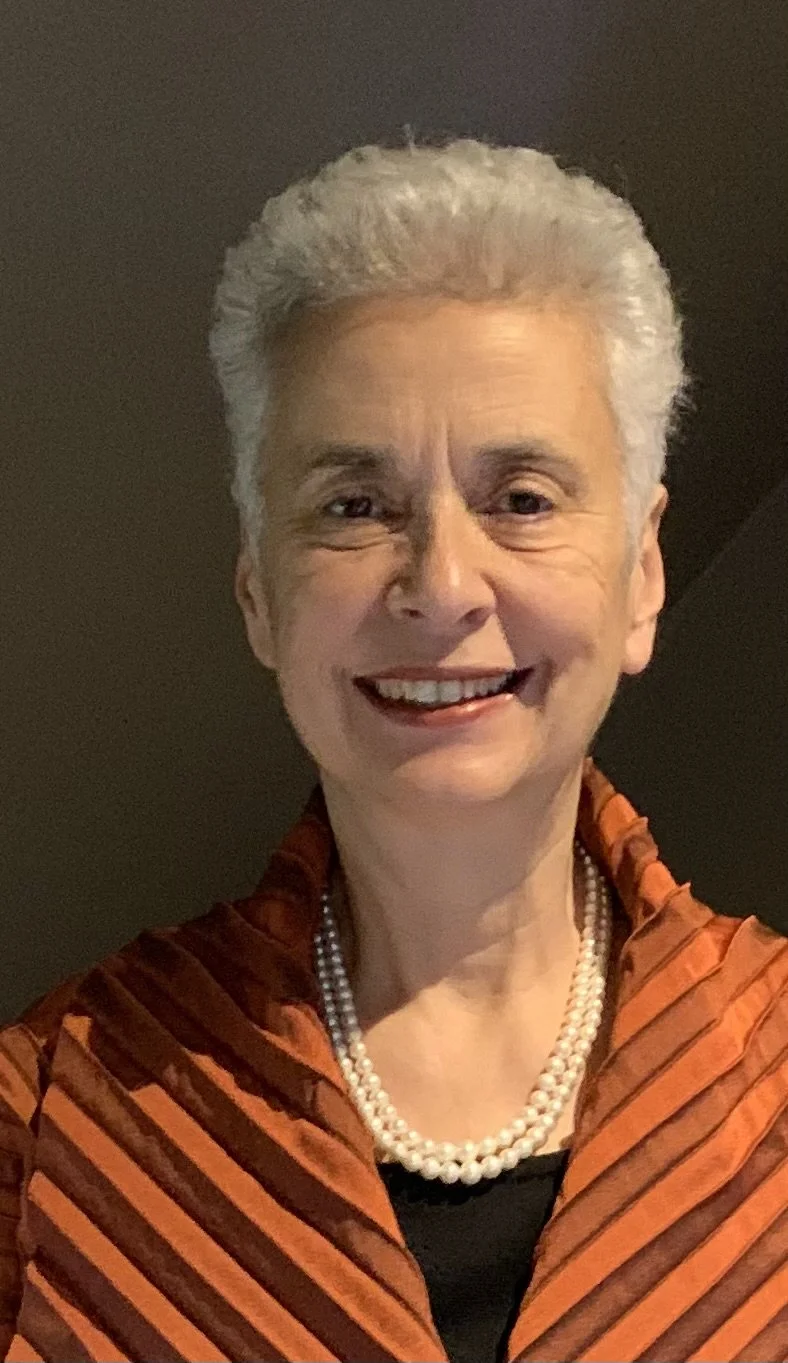
Now retired, Roula has worked in education, the arts and architecture, latterly as Director of Communications at The Royal Institute of British Architects. She is a Fellow of The Royal Society for the Arts and a former Vice-Chair of The Anglo-Hellenic League.